
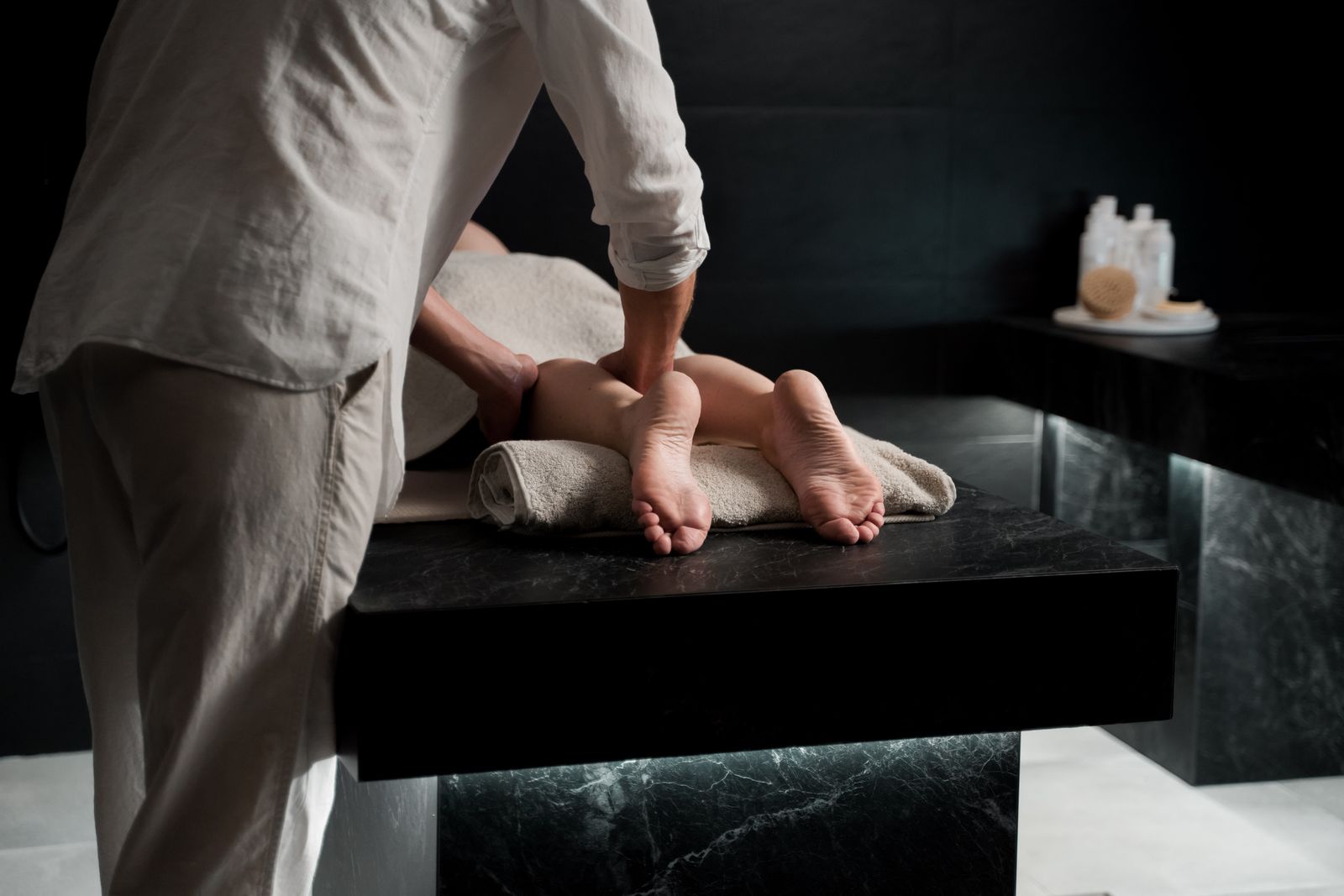
How Often Should You Get a Massage? Frequency by Goal
The honest answer to “how often should I get a massage?” depends entirely on why you’re booking. Massage for chronic pain has a different optimal frequency than massage for general relaxation, which is different again from sports recovery or post-flight reset. This guide breaks down recommended frequency by goal, not by treatment type, so you can plan a realistic schedule that actually delivers the result you’re paying for.
TLDR — frequency by goal
| Goal | Recommended frequency | Typical session length |
|---|---|---|
| General relaxation / wellness maintenance | Every 2–4 weeks | 60–90 min |
| Chronic pain or tension | Weekly for 4–6 weeks, then bi-weekly maintenance | 60–90 min |
| Sports recovery | Weekly during training peaks; every 2 weeks in off-season | 60 min |
| Sleep support | Weekly for 4 weeks to “anchor” sleep, then every 2 weeks | 60 min |
| Post-flight / jet lag | Once, ideally within 48 hours of landing | 60–90 min |
| Pregnancy | Every 3–4 weeks (from month 3 onwards) | 60 min |
| Anxiety / stress reduction | Weekly for 4–6 weeks during acute periods | 60–90 min |
| Lymphatic / circulation | Series of 6–10 weekly sessions, then monthly | 60 min |
Below: the reasoning behind each frequency, plus what changes when you go more or less often than the recommendation.
General relaxation and wellness maintenance — every 2–4 weeks
Most regular Kimantra clients book at this cadence. Twice a month is the most common pattern (every 14 days), with monthly visits a strong alternative if budget or time is the constraint.
Why this works: the relaxation and parasympathetic-system benefits of a single session last roughly 7–10 days for most people. Booking every 14 days lets you ride the back end of one session into the next. Going monthly is fine but you’ll notice the gap.
What happens if you go more often: there’s a diminishing return after about every 10 days for relaxation alone. The session is still pleasant; you’re just not getting much additional benefit over your last visit.
What happens if you go less often: the cumulative-wellness effect doesn’t build. Each session feels good but you’re starting from scratch each time, rather than maintaining a baseline of lower physical tension.
Chronic pain or tension — weekly for 4–6 weeks, then bi-weekly
If you’re booking specifically to address chronic neck, shoulder, lower-back, or hip tension, the literature and clinical experience both point the same direction: frequency matters in the early weeks.
Recommended protocol:
- Weeks 1–4: weekly 60–90 minute sessions, ideally with the same therapist.
- Weeks 5–8: every 10–14 days as the tension reduces.
- Ongoing: monthly maintenance once the issue is resolved.
Why this works: chronic muscle tension involves adaptive holding patterns — your nervous system has learned to keep those muscles tense. Re-training that pattern requires repeated stimulus, not occasional intervention. One massage every 2 months will not move chronic tension; weekly will.
The most relevant Kimantra modalities for chronic pain: Thai massage, hot stone massage, and deep tissue massage.
Sports recovery — weekly during training peaks, every 2 weeks in off-season
For runners, gym athletes, and recreational sport players:
During heavy training (marathon prep, competition season, etc.):
- Weekly massage, ideally 24–48 hours after the hardest session of the week, not immediately after.
During off-season or maintenance training:
- Every 2 weeks is sufficient.
Why this works: massage doesn’t speed muscle recovery as much as some athletes believe (the evidence on lactic-acid clearance is weaker than commonly claimed), but it does reduce delayed-onset muscle soreness (DOMS) and helps maintain range of motion. For athletes, the bigger benefit is often parasympathetic system support — recovery sleep, lower resting heart rate, better next-week training quality.
Best Kimantra modality for sports: Thai massage for mobility, post-workout massage for recovery, or sports massage for athletic-specific work.
Sleep support — weekly for 4 weeks, then every 2 weeks
If poor sleep is the reason you’re booking:
Anchor phase (weeks 1–4): weekly 60-minute sessions, ideally booked late afternoon. The parasympathetic-system activation from massage tends to extend into that evening’s sleep.
Maintenance phase: every 2 weeks is enough to keep sleep quality elevated.
Best modalities for sleep support: Balinese massage, relaxation massage, or Shirodara head massage — all three have the strongest reports of “I slept better that night.”
Post-flight or jet lag — once, ideally within 48 hours of landing
This is the only goal on the list where the frequency answer is one session, well-timed.
Why: jet lag involves circadian disruption, mild dehydration, and lymphatic stagnation from sitting still in cabin pressure. A single 60–90 minute massage can address all three meaningfully — re-engaging the parasympathetic system to support sleep on the local schedule, moving fluid, releasing the tension that accumulates from sleeping on a plane.
A second session is rarely worth booking specifically for jet lag — by the time you’d book it, you’ve adjusted.
Best modalities post-flight: lymphatic drainage (specifically for swelling), Balinese massage (for general reset), or see the jet lag recovery guide for a more detailed protocol.
Pregnancy — every 3–4 weeks from month 3 onwards
Pregnancy massage is contraindicated in the first trimester. From the second trimester onwards, every 3–4 weeks is the recommended cadence — frequent enough to address the typical pregnancy complaints (lower back, hip tightness, swelling, sleep difficulty), infrequent enough to avoid over-stimulating circulatory changes.
Always book with Kimantra’s pregnancy massage specifically — therapists with prenatal training, side-lying positioning, and oils selected for prenatal safety. Don’t substitute a regular massage with “lighter pressure.”
Anxiety and acute stress — weekly during high-stress periods
When stress is acute — pre-wedding, project crunch, family caretaking, expat-relocation phase — weekly massage for 4–6 weeks is the protocol that delivers the most relief.
Why this works: unlike chronic muscle tension which is body-led, anxiety is nervous-system-led. Weekly parasympathetic-system activation through massage tends to compound — by week 3 or 4, most guests report sleeping better, eating better, and reacting less reactively to stressors that previously felt overwhelming.
Most relevant Kimantra resources: Stress relief massage pillar, Aromatherapy massage, and audience-specific spokes for executives and expats.
Lymphatic / circulation work — 6–10 weekly sessions, then monthly
Lymphatic drainage is the one modality on this list with a clear “series” protocol. The lymphatic system responds to consistent, repeated stimulus more than to single sessions. The classic Vodder-style protocol calls for 6–10 weekly sessions to establish improved drainage, followed by monthly maintenance.
If you’re booking lymphatic drainage as a single relaxation session, that’s fine — but the cumulative benefit is in the series, not in any one visit. See lymphatic drainage massage Lebanon for the deep-dive.
Frequency myths to ignore
“More often is always better.” Not true. Past a certain frequency (usually every 7–10 days for general wellness), additional sessions don’t add measurable benefit — you’d be spending money on diminishing returns.
“Once a month is enough for chronic pain.” Not true. Monthly massage maintains a relaxed person’s baseline; it doesn’t move chronic tension. For chronic issues, the protocol needs to be denser in the first 4–6 weeks.
“You should never get a massage when you’re sick.” Half-true. Skip massage with active fever, flu, or contagious infection. But mild cold/congestion is fine and often helpful.
“You can’t massage during pregnancy.” False. Pregnancy massage from month 3 onwards is safe and beneficial — book the prenatal modality specifically.
How to budget for this
For most guests with a general-wellness goal, two visits per month is the realistic sustainable cadence. The math:
- 2 visits × 4 weeks × 12 months = 24 sessions per year.
- That’s enough to maintain a noticeable wellness baseline and stay ahead of accumulated tension.
If two per month is too much, prioritize quality over quantity — book the 90-minute Kimantra Fusion or a properly long Thai/Balinese session monthly, rather than three quick 30-minute sessions you’ll only half-feel.
FAQ
Can I get a massage every day? Physically, yes. Practically, no — diminishing returns kick in fast, and your wallet won’t thank you. Even professional athletes rarely exceed 2–3 sessions per week.
Will my body get “used to” massage if I go too often? Not in any meaningful sense. You’ll adapt to specific therapists and learn what you like, but the parasympathetic-system benefit doesn’t habituate away.
Does the modality I choose affect how often I should go? Yes. Lymphatic and chronic-pain work follow specific series protocols. Relaxation and general-wellness modalities are flexible.
Should I see the same therapist each visit? For chronic-pain or therapeutic work, yes — continuity matters. For general relaxation, it’s fine to rotate.
Is there a “best time of week” for a massage? For sleep support, late afternoon. For relaxation, anytime. For sports recovery, 24–48 hours after your hardest session.
Are there long-term risks to frequent massage? No documented ones for properly-trained therapists working at appropriate pressures. The risk is over-stretching or over-pressuring, which is a single-session risk, not a frequency risk.
Related reading at Kimantra Spa
- Top 12 spa treatments in Lebanon — once you’ve picked your frequency, pick the modality.
- How to choose the right massage — modality-by-goal decision guide.
- Stress relief massage pillar — when stress is the underlying frequency driver.
- Sports massage Lebanon — frequency for athletes.
- Pregnancy massage Lebanon — prenatal frequency.
- Spa gift vouchers Lebanon — vouchers that bundle multi-session plans.
- Lymphatic drainage massage Lebanon — the modality with the most distinct series protocol.
Book your next session at Kimantra Spa
Whatever the cadence you settle on, book online at kimantraspas.com/appointment or call 04-546654 (Dbayeh) or 03-546654 (Beirut). For chronic-pain protocols specifically, ask to be matched with a therapist who’ll work with you across the 4–6 week series.
View all treatments | About Kimantra Spa | Contact us

Written by
Marie Hashem
Marie Christine Hachem is a certified massage therapist with professional training in Chiang Mai, Thailand, and further studies in India and Bali, where she explored traditional therapies and healing methods.In 2010, she founded Kimantra Spa to bring globally inspired wellness traditions to Lebanon. Today, she personally trains and mentors therapists, with a strong focus on continuous education, attention to detail, and excellence in massage techniques.
View all posts →Related Posts
Affordable Luxury: Spa Experiences in Beirut for Expats Spa, Massage Spa, and Spa Massage: Your Guide to Ultimate Relaxation How to Find Trusted Wellness Services in LebanonContact Us
For more information, bookings, or inquiries, reach out to us directly: