Inside the Moroccan Hammam Ritual at Kimantra: A Step-by-Step Photo Story
Updated for 2026, last reviewed 12 June 2026. Photos are illustrative of the traditional Moroccan hammam ritual.
The Moroccan hammam ritual moves through five steps — steam acclimation, black-soap application, kessa-glove exfoliation, rhassoul-clay masking, and argan-oil finishing — over roughly 60 minutes. Words describe the sequence; photographs show what it actually looks like. This photo story walks the ritual offered at Kimantra Spa frame by frame, so you know exactly what you’ll see, smell, and feel before you book.
Which hammam page do you need? This is the visual walkthrough. If you want the complete benefits-and-booking guide, read the full Moroccan hammam guide with booking context. If you want the plain-text definition of each stage and its skin mechanics, read the stage-by-stage hammam explainer. This page exists for one reason: to show you the ritual.
The ritual at a glance — what the camera sees
| Step | Time | What the camera sees |
|---|---|---|
| Arrival | ~10 min | Robe, slippers, herbal tea in the lounge |
| 1. Steam | 10–15 min | A dim, tiled room at 38–42°C, air thick with vapor |
| 2. Black soap | 5–10 min | Dark olive-paste savon noir smoothed over warm skin |
| 3. Kessa glove | 10–15 min | Firm strokes; grey rolls of dead skin lifting away |
| 4. Rhassoul clay | 15–20 min | Atlas-Mountain clay mixed with floral water, painted on |
| Rinse | ~5 min | Warm water poured from a traditional bowl |
| 5. Argan oil | 10–15 min | Golden oil sealing freshly polished skin |
| Afterglow | ~15 min | Tea, dates, and visibly brighter skin in the lounge |
Arrival: robe, slippers, and the quiet before the steam
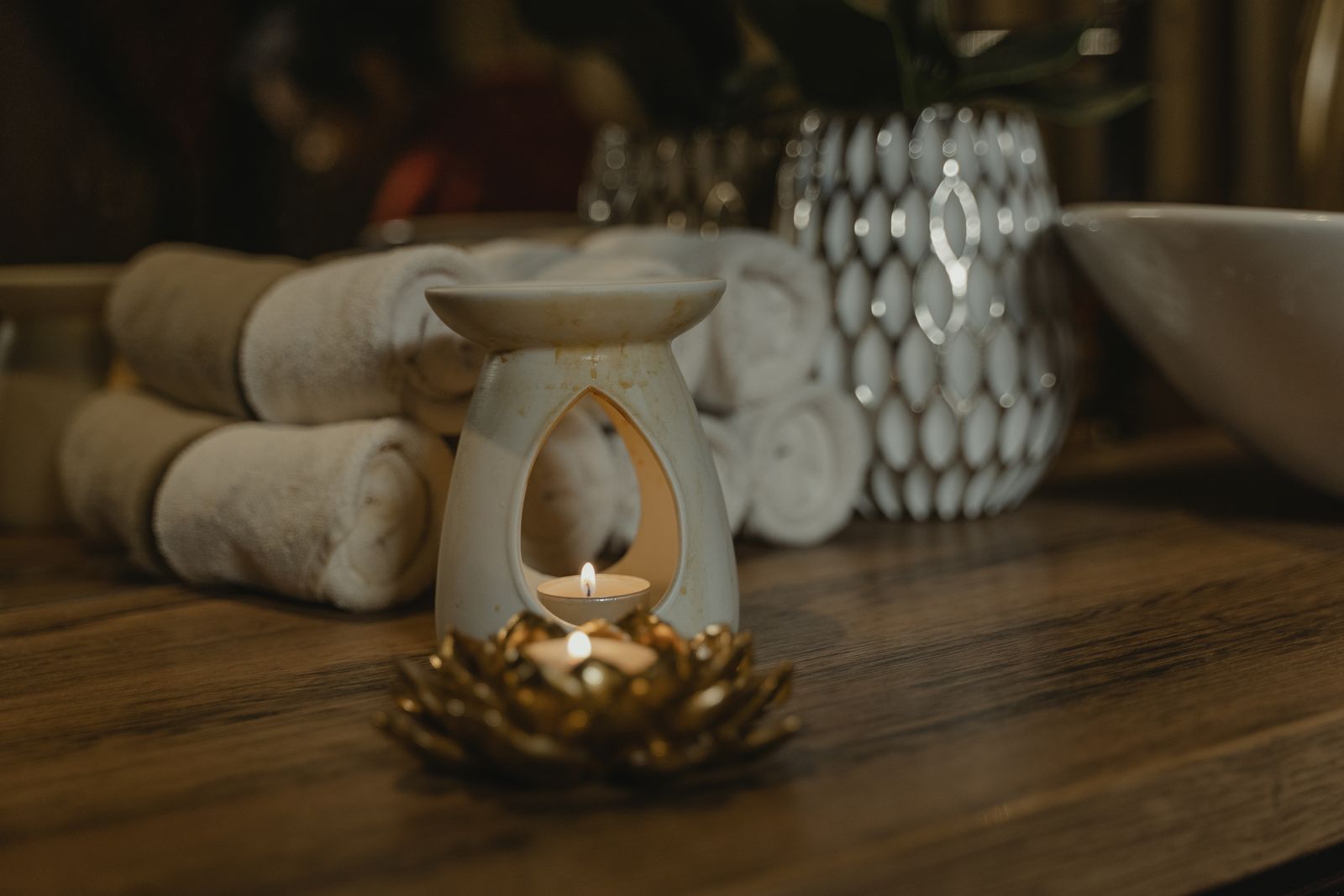
Rolled towels and a lit oil burner — the quiet still life every spa arrival is built around. At Kimantra, the ritual starts before the steam does, with a robe, slippers, and herbal tea in the lounge.
Every hammam at Kimantra begins the same unhurried way. You change in a private area, leave your phone in a locker, and sit with a warm herbal tea while your therapist prepares the suite. Where ancient healing wisdom meets modern luxury, the pace is deliberate: arriving calm makes the steam work faster.
Step 1 — The steam room: heat you can photograph
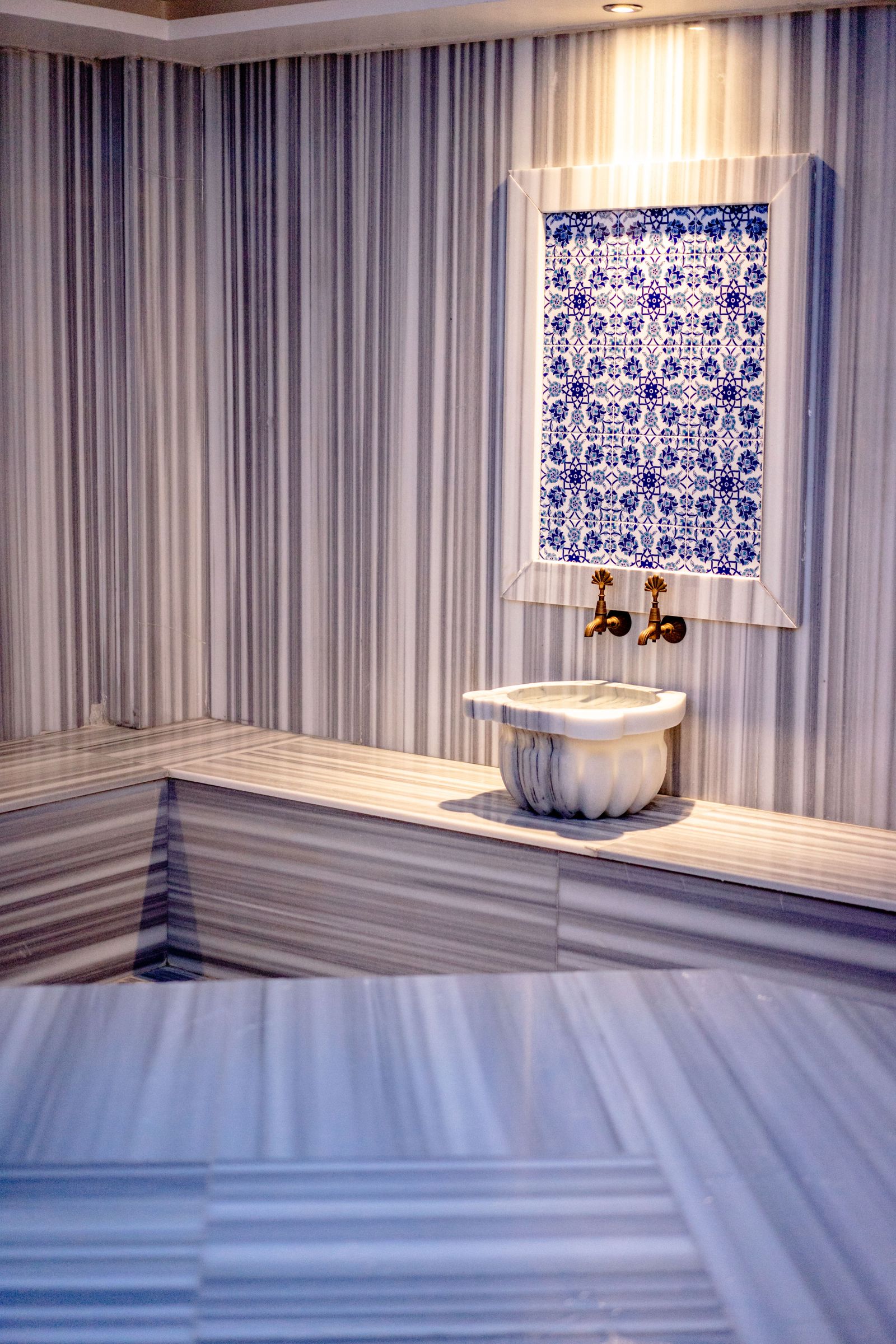
A traditional marble hammam: striped walls, heated bench, carved kurna basin and blue Iznik tilework — the architecture this step descends from. Kimantra’s private steam room holds 38–42°C with near-total humidity.
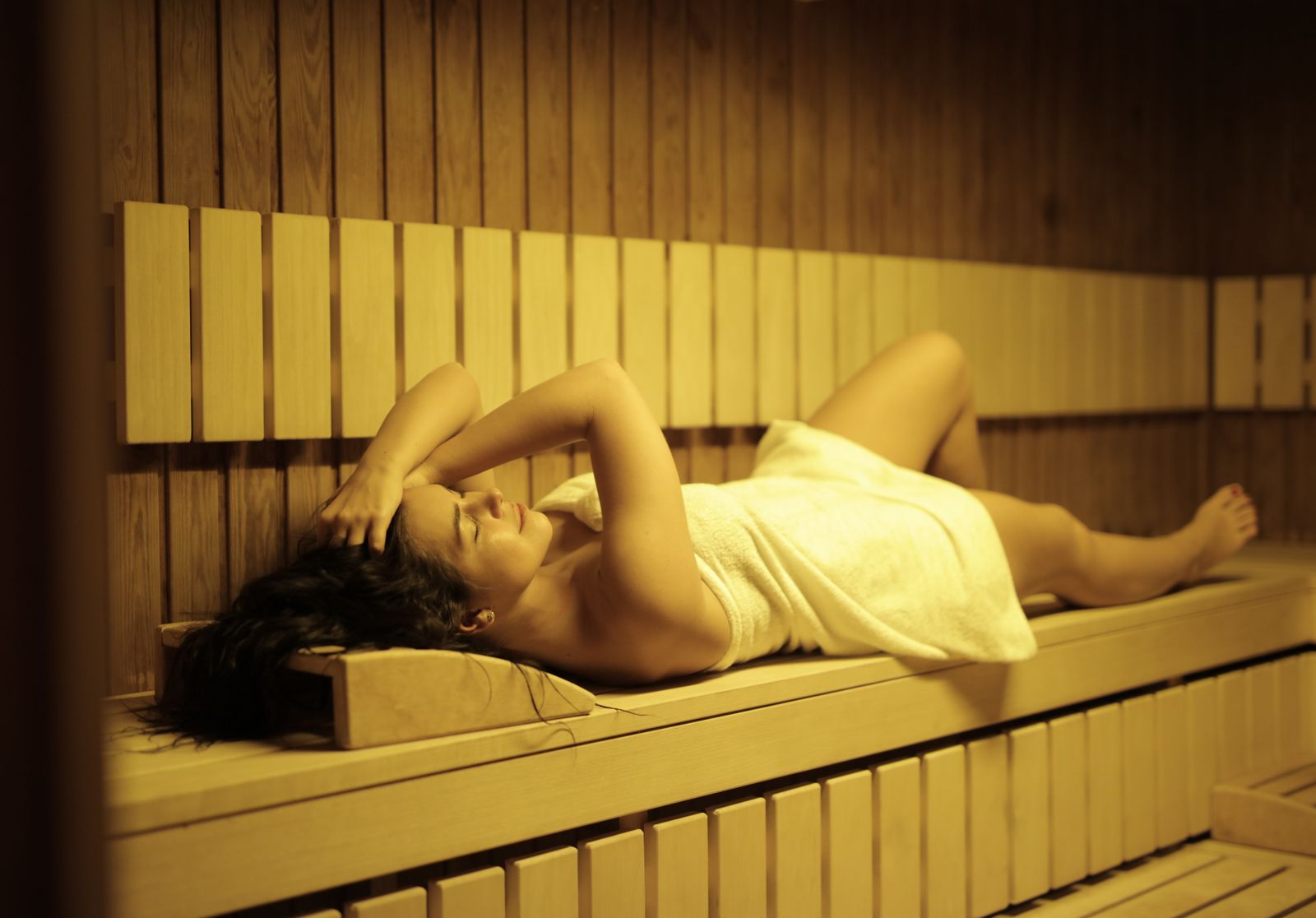
Wrapped in a towel on a warm bench in low golden light — ten to fifteen minutes of this is all the first step asks of you.
The first step looks like almost nothing — and that’s the point. You sit in a humid, dimly lit room while the heat dilates pores and loosens the outermost layer of skin. The skin’s surface layer renews itself roughly every 28 days; the steam softens the oldest cells of that cycle so the next two steps can lift them away. Guests usually report this as the moment the outside world goes quiet.
Step 2 — Black soap: the dark paste that confuses everyone
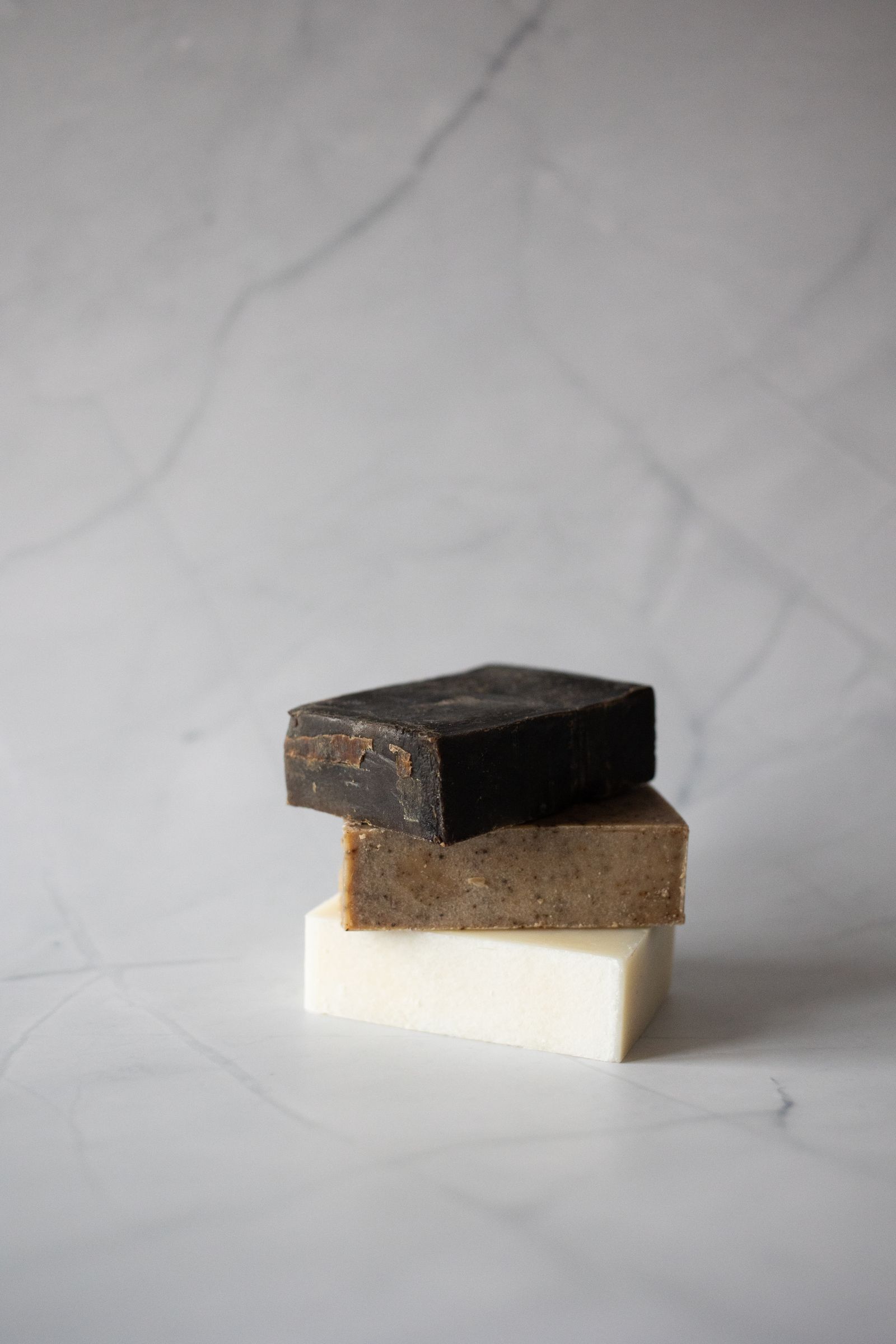
Artisan olive soaps on marble — the dark block on top is the closest cousin to savon noir, the olive paste used in the hammam.
The first time guests see Moroccan black soap, most assume it’s the clay. It isn’t — it’s an olive-oil soap with a dense, glossy texture and a faintly herbal, earthy scent. Your therapist smooths it across the whole body and lets it sit for several minutes. On camera it photographs almost black; on skin it turns to a thin amber film that primes the surface for the glove.
Step 3 — The kessa glove: the photograph nobody believes
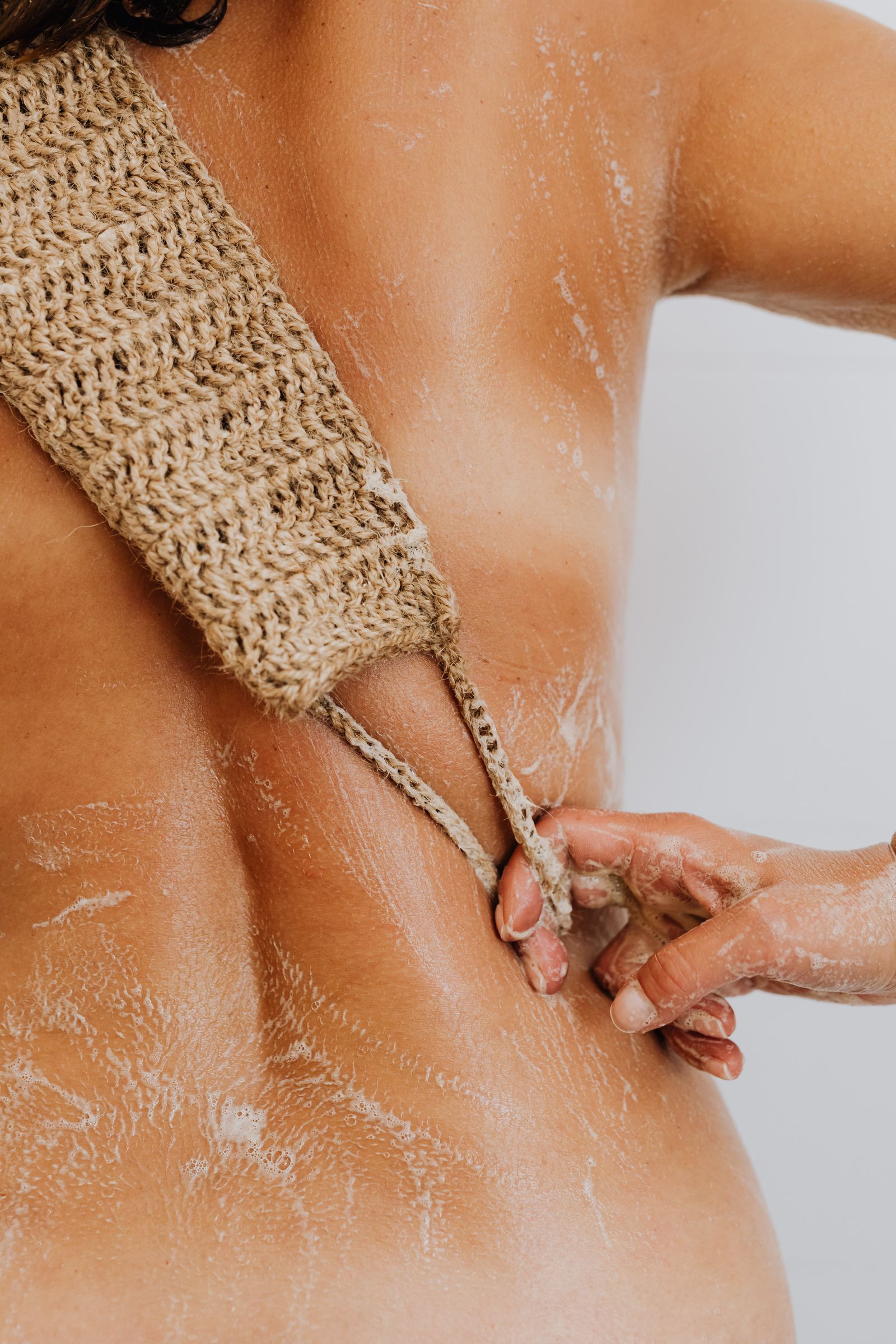
A woven exfoliating strap drawn across lathered skin — the same coarse-weave principle the kessa mitt has worked on for centuries.
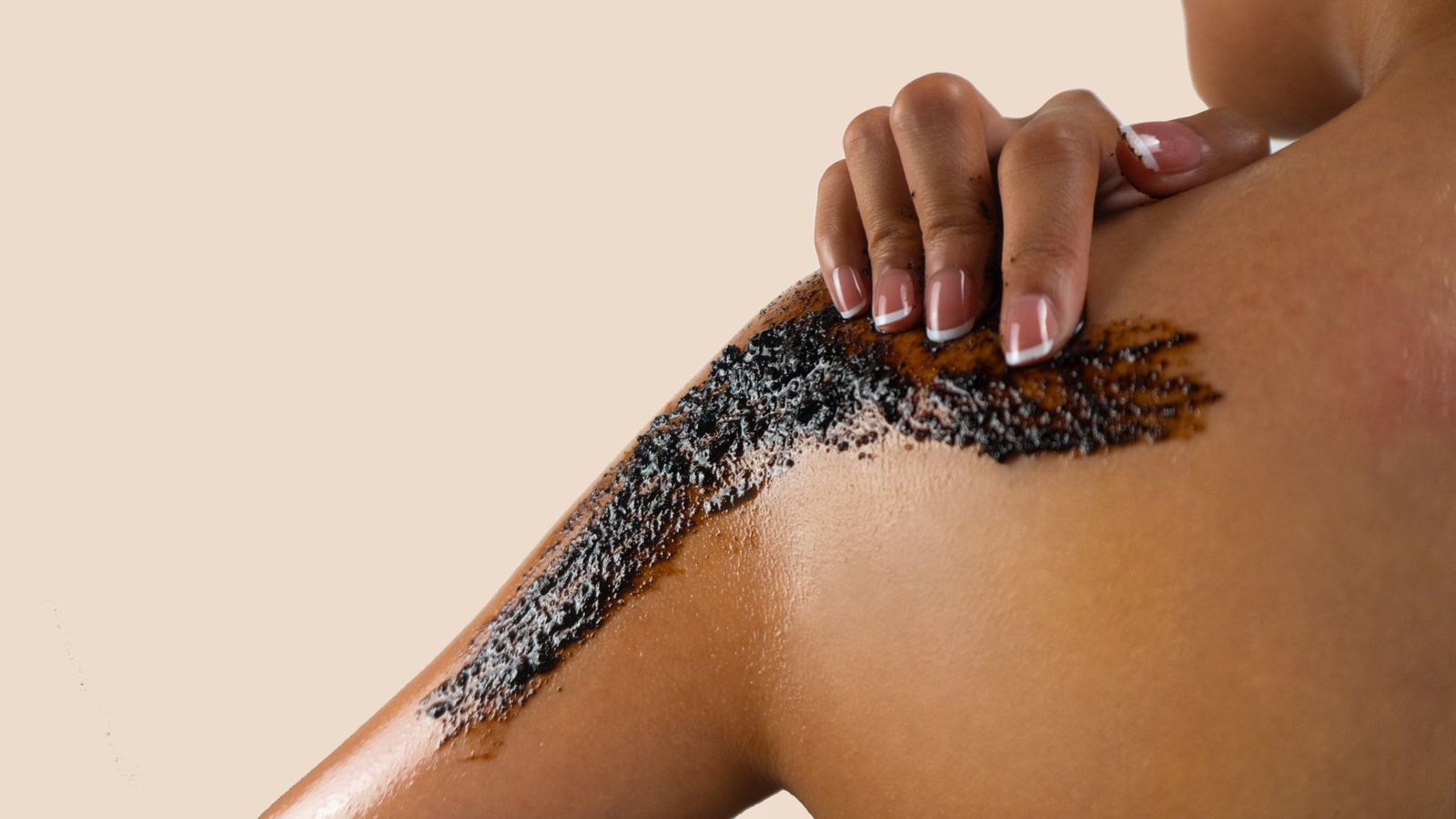
Granular exfoliation worked across the shoulder by hand — in the hammam, the kessa glove does this job in long, firm strokes after the black soap.
This is the step that turns first-timers into regulars, and the image guests most want proof of. The therapist works the kessa in long, firm, directional strokes, and the softened dead skin gathers into small grey rolls that sit visibly on the surface before being rinsed away. It looks dramatic in a photograph; in the room it simply feels like a very thorough, very confident scrub. Our certified therapists specialize in diverse healing traditions, and the kessa technique — pressure even, strokes directional, no shortcuts — is one they train on specifically.
One guest review captures the repeat-visit effect better than we could: “Every time I think it’s the best one yet, the next session somehow turns out even better.”
Step 4 — Rhassoul clay: minerals from the Atlas Mountains
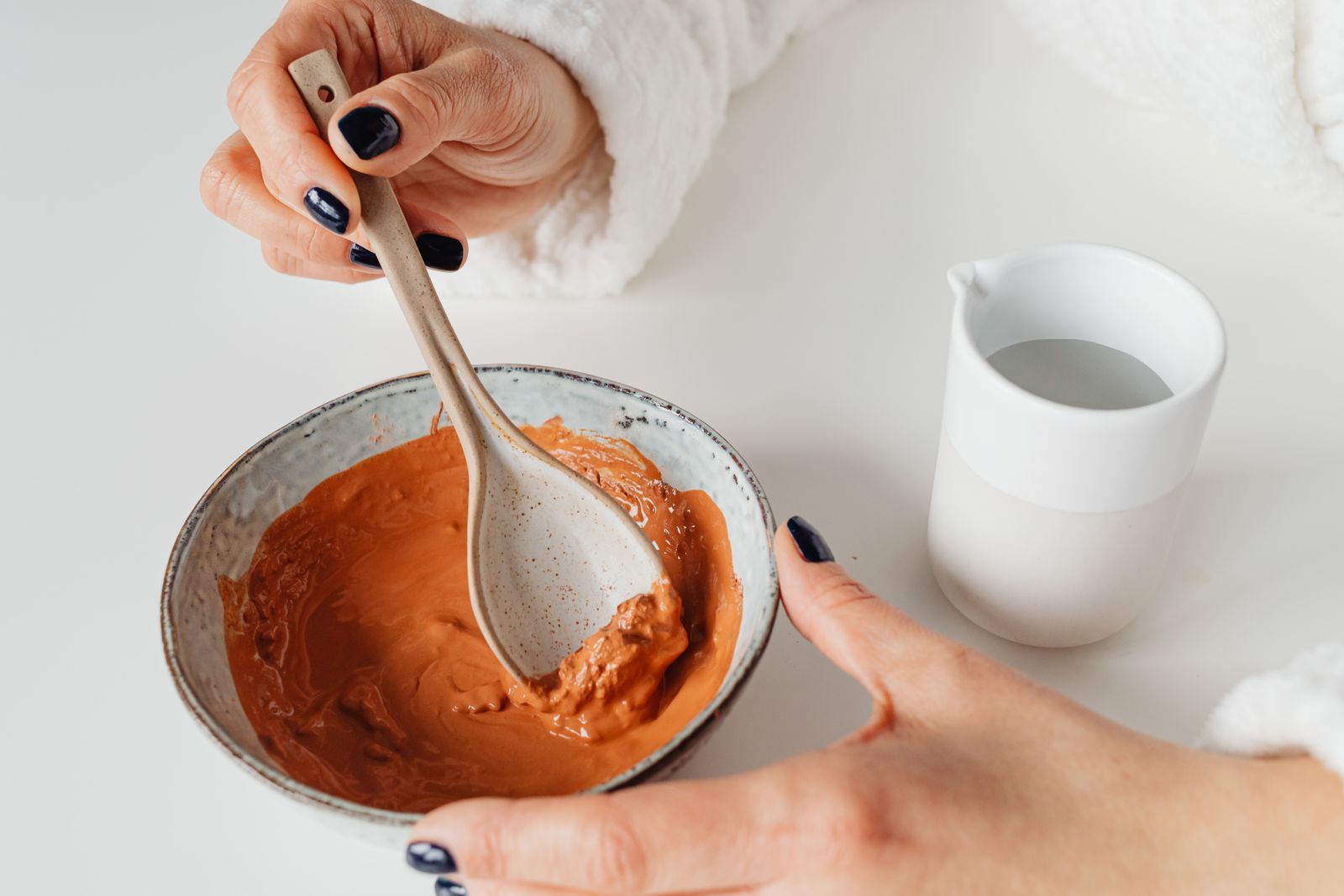
Mineral clay stirred with water moments before it goes on — rhassoul is always blended fresh, never pre-mixed.
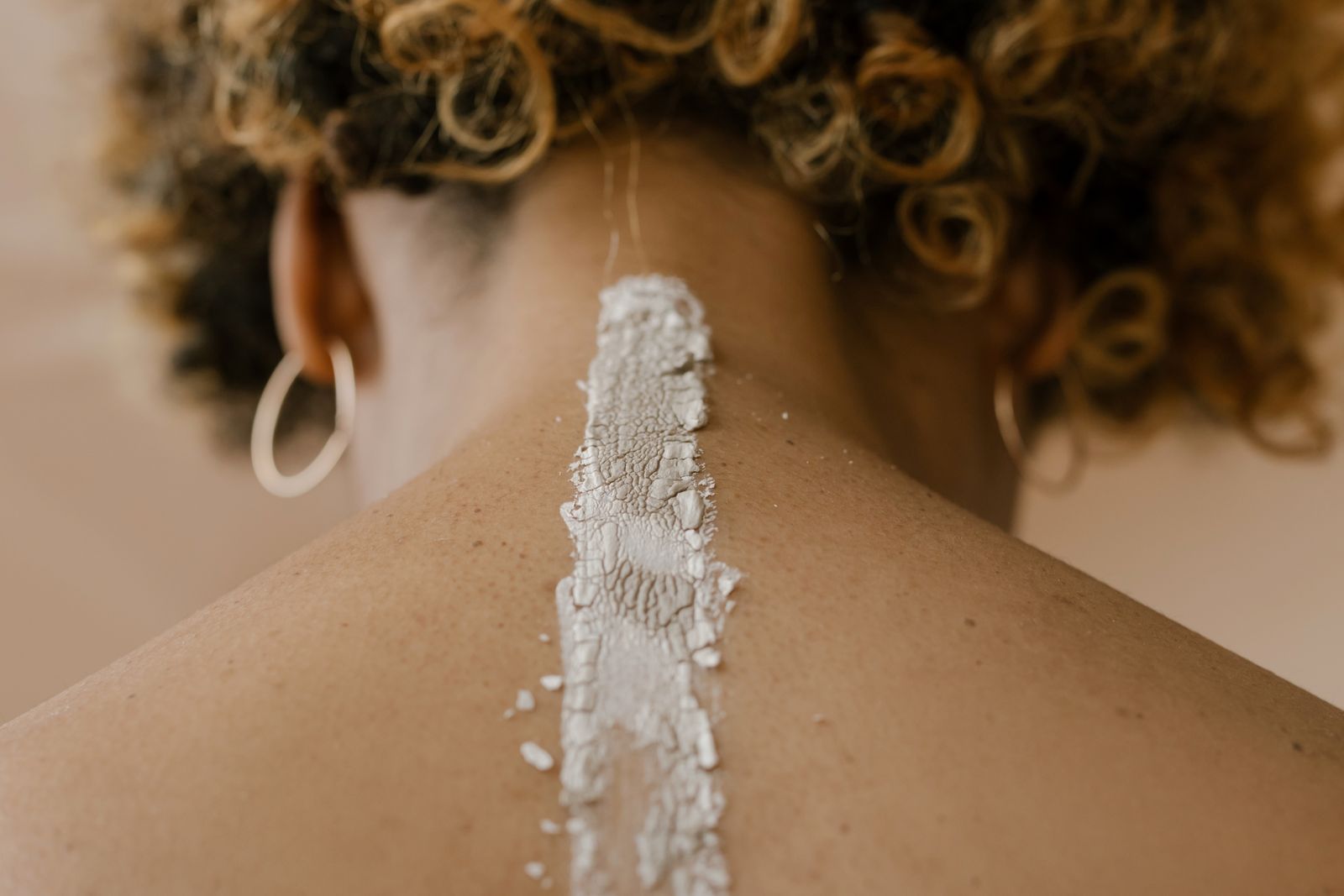
Clay laid along the spine and neck — in the full ritual it covers the body, goes on warm, and dries slightly before the rinse, drawing impurities as it sets.
Freshly polished skin gets a mineral drink. Rhassoul — a clay mined in the Atlas Mountains and used in Maghrebi bathhouses for centuries — is mixed on the spot and applied across the body. Photographed up close, it has a soft chocolate-brown swirl; on the skin it tightens gently as it dries. While it sets, you simply rest in the warmth.
The rinse: the oldest gesture in the ritual
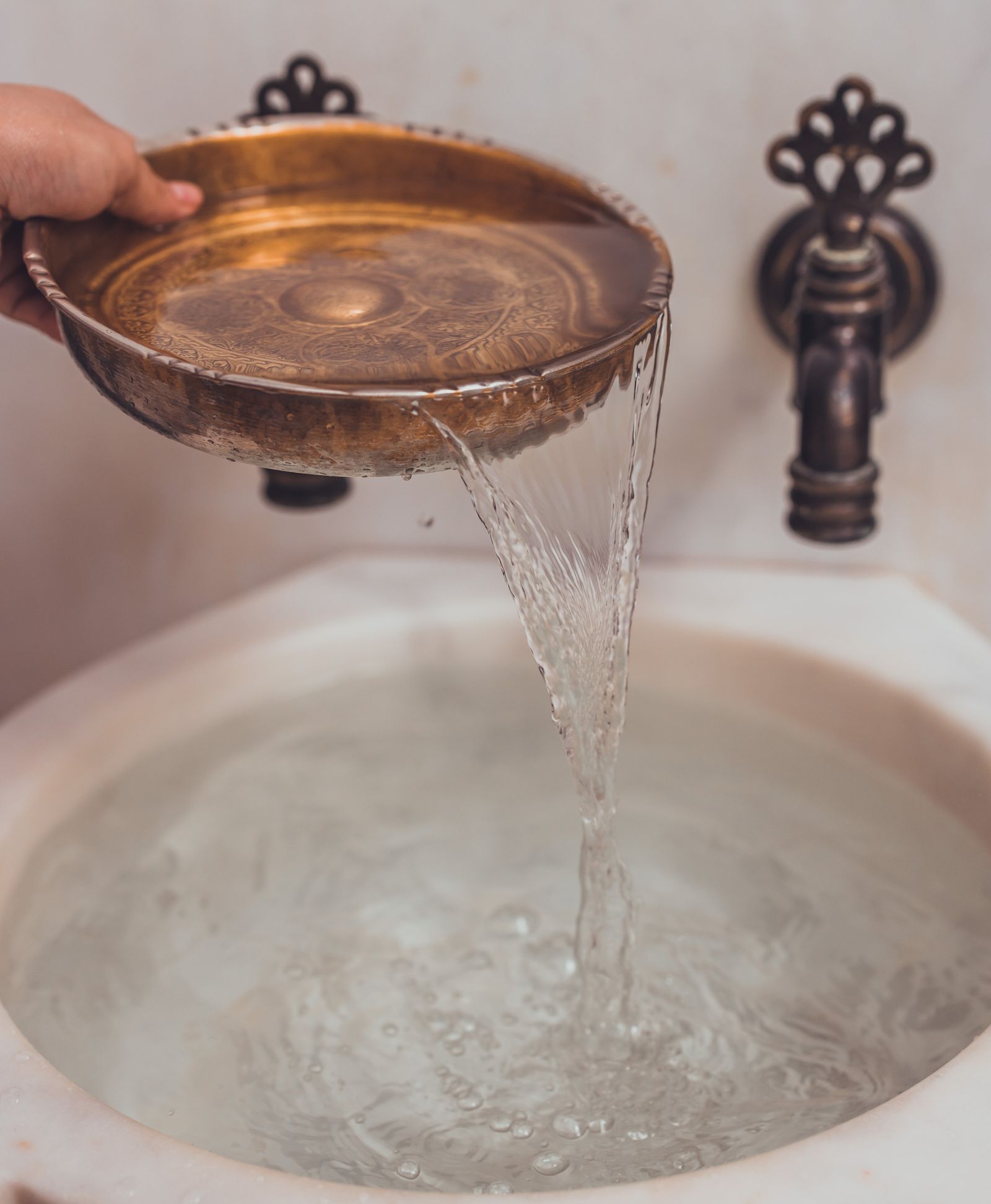
An engraved brass hammam bowl pouring into a marble kurna — the rinse gesture, unchanged for generations, and still the most photogenic moment of the hour.
Between clay and oil comes the gesture every hammam culture shares: warm water poured by hand from a rounded bowl. UNESCO inscribed Morocco’s argan practices on its Intangible Cultural Heritage list in 2014, and the wider hammam tradition carries the same generational weight — the rinse is where you feel it most. Rigorous hygiene protocols sit invisibly underneath the tradition: every kessa is single-guest, every surface reset between sessions.
Step 5 — Argan oil: sealing the result
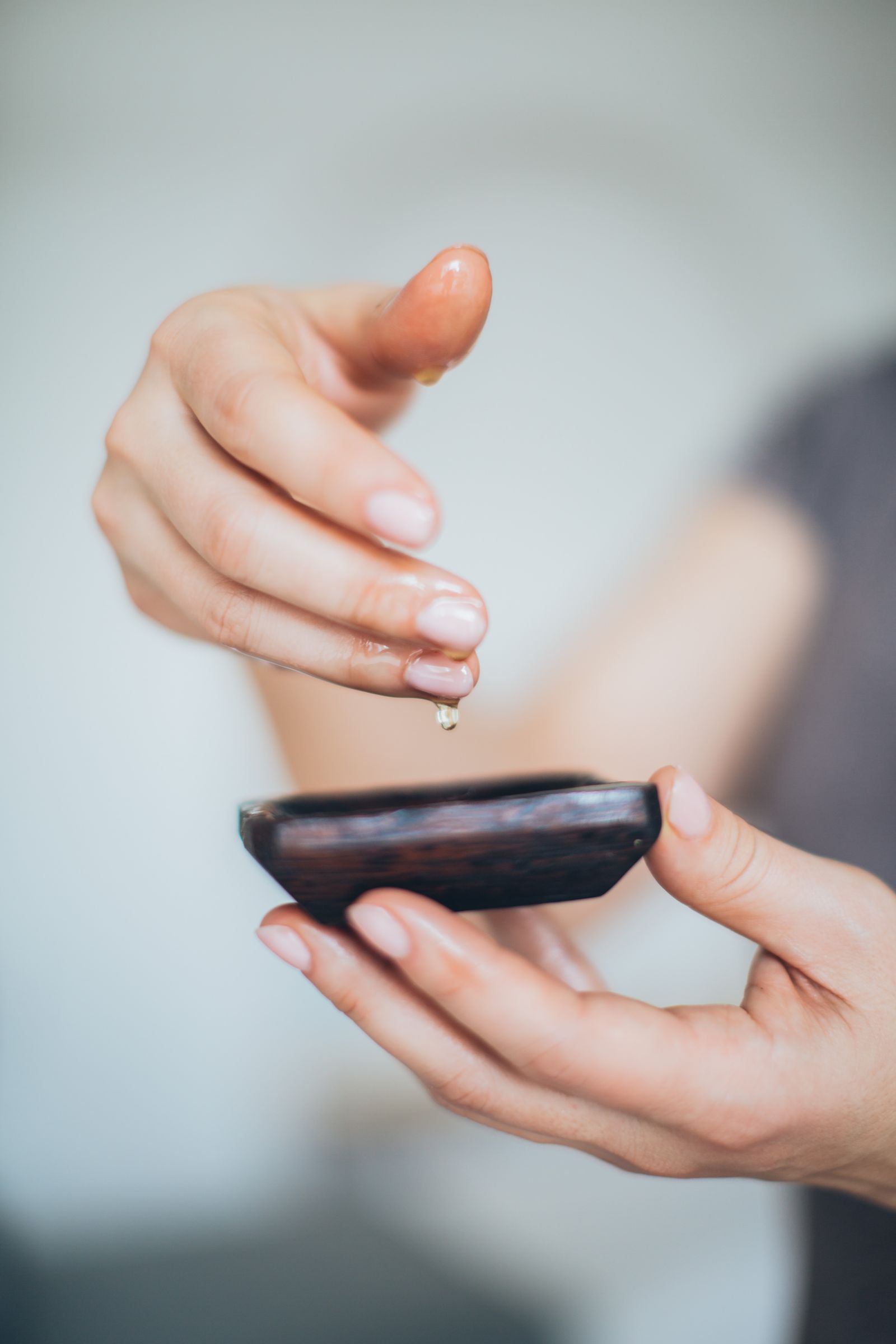
Golden oil running from the fingertips — warm argan oil locks moisture into skin that has just shed its oldest layer.
The closing step is the simplest to photograph and the easiest to feel: warm argan oil, sometimes blended with orange-blossom or rose, massaged over the entire body. It restores the moisture barrier after the glove and clay work, which is why post-hammam skin feels supple rather than scrubbed-raw.
The afterglow: what 60 minutes actually buys you
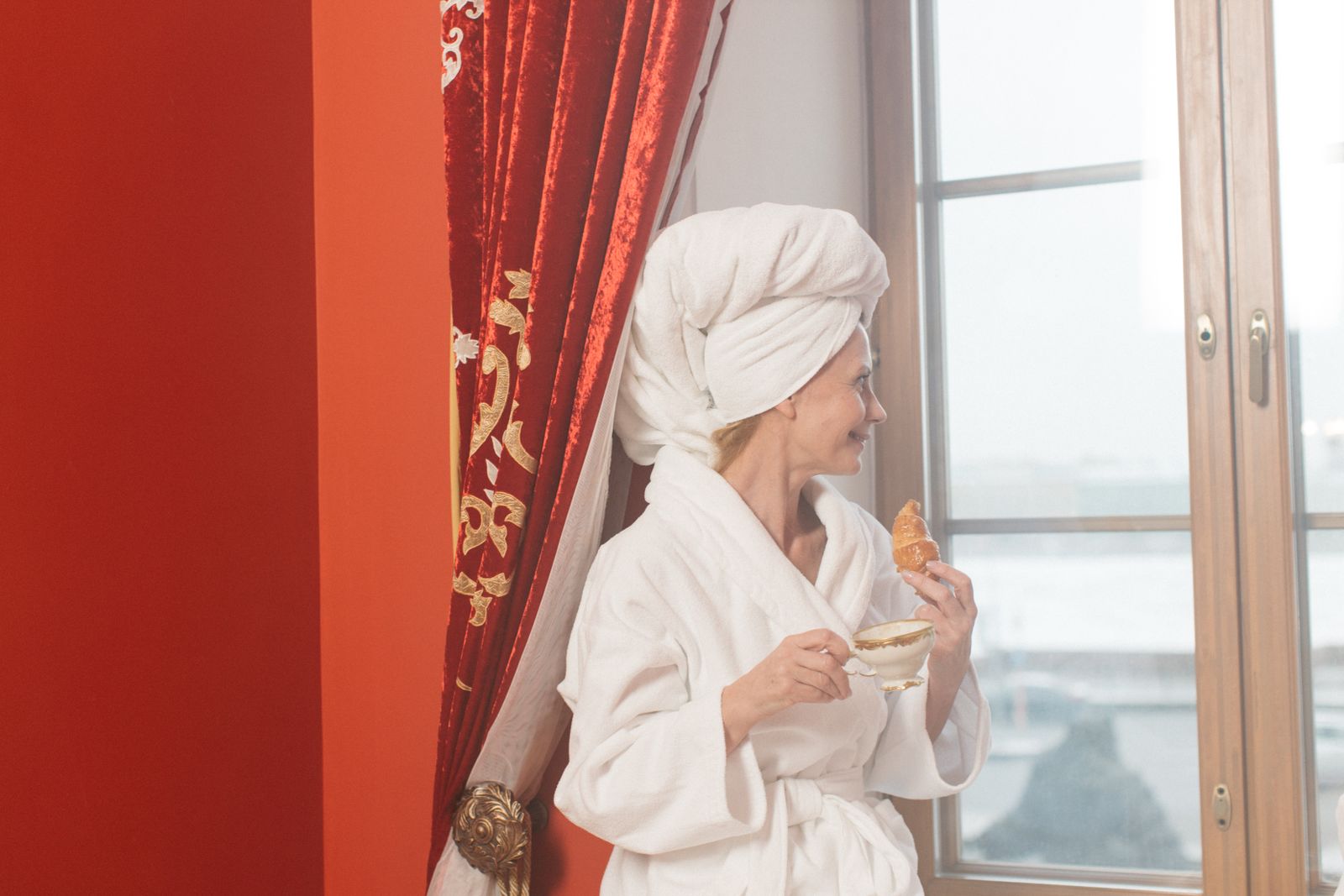
Robe, hair towel, tea by a bright window — the afterglow is real: brighter, smoother skin and a slowed-down nervous system, best enjoyed unhurried.
You leave the suite with skin that photographs differently than it did an hour earlier — most guests notice the change on their own forearms before any mirror. As the top-rated spa in Lebanon with locations in Beirut and Dbayeh, Kimantra schedules a quiet buffer after every hammam so the experience ends in the lounge, not in a corridor. Step into a ritual perfected over centuries at Kimantra Spa — and give yourself the extra fifteen minutes.
Want to step out of the pictures and into the steam? Book your own hammam ritual at Kimantra Spa, or pair the hammam with a Balinese massage while your muscles are still warm.
Frequently asked questions about the hammam experience in pictures
Can I take photos during my own hammam at Kimantra?
No — treatment areas at Kimantra are photo-free to protect every guest’s privacy. That’s also why the images in this story are illustrative stock photographs of the traditional ritual rather than pictures taken inside Kimantra’s treatment rooms. The lounge and entrance areas are fine for photos.
Is the hammam at Kimantra communal like in Morocco?
No. Traditional Maghrebi hammams are public bathhouses; Kimantra delivers the same five-step ritual in a private suite for one guest (or a couple, on request). You share the room with your therapist and nobody else.
What are the grey rolls everyone mentions after kessa exfoliation?
Softened dead skin cells from the surface layer, lifted by the kessa glove after the steam and black soap have loosened them. They look dramatic on camera precisely because regular showering never removes them — that’s the visible proof the ritual works.
Will I be covered during the ritual?
Yes. Disposable underwear is provided and a wrap or towel covers whatever isn’t being worked on — the towel-wrapped coverage shown in the images above is true to how much a real session involves.
How hot does the steam room actually feel?
The room sits at 38–42°C with very high humidity — noticeably warmer than a hot bath but well below a Scandinavian sauna. Most guests acclimate within two to three minutes; tell your therapist if you’d like the door cracked.
How far before a wedding or big event should I book a hammam?
Three to five days out is the sweet spot — the mild post-exfoliation flush settles within hours, and the smooth-skin effect peaks over the following days. Slots fill fast in wedding season, so secure your date on the appointment page early, or contact the team to plan around your event.
Related Reading at Kimantra Spa
- Full Moroccan hammam guide with booking context — the commercial pillar: benefits, who it’s for, contraindications, and how to book.
- Stage-by-stage hammam explainer — the plain-text definition page covering timings, skin mechanics, and the Moroccan-vs-Turkish comparison.
- Moroccan Hammam treatment page — durations and the direct booking menu for the ritual illustrated above.
- Stand-alone gommage without the steam stages — if the exfoliation photos sold you but you want a shorter format.
- Multi-step detox spa experience — body-cleansing treatments that extend the hammam’s effect.
- Two-hour scrub-wrap-massage journey — the Balinese answer to a multi-stage body ritual.
- First-timer’s walkthrough of a luxury spa visit — everything around the treatment: arrival, etiquette, tipping, and the questions nobody asks out loud.
- Regional self-care traditions — the cultural backdrop the hammam belongs to.
See it in person
Photographs get you ninety percent of the way; the steam does the rest. WhatsApp us at +961 3 546654 to book your escape, call 04-546654 (Dbayeh) or 03-546654 (Beirut Downtown), or book online at kimantraspas.com/appointment. Hours: Monday–Saturday 10 AM–10 PM at the Dbayeh flagship; the Beirut Souks location welcomes you seven days a week.
View all treatments | About Kimantra Spa | Contact us

Written by
Marie Hashem
Marie Christine Hachem is a certified massage therapist with professional training in Chiang Mai, Thailand, and further studies in India and Bali, where she explored traditional therapies and healing methods.In 2010, she founded Kimantra Spa to bring globally inspired wellness traditions to Lebanon. Today, she personally trains and mentors therapists, with a strong focus on continuous education, attention to detail, and excellence in massage techniques.
View all posts →Related Posts
Spa in Mount Lebanon: Premium Wellness for Guests From Bikfaya, Broumana & Beit Mery Spa Packages Lebanon: Full-Day Wellness Experiences Birthday Spa Packages Beirut: Celebrate with Luxury WellnessContact Us
For more information, bookings, or inquiries, reach out to us directly: